
Article categories:
- BibleReference
- BibleStudy
- Torah
- Gospels
- Confirmation
- Supersessionism
- Methodism
- DoNoHarm
- PublicTheology
- ClinicalEthics
- Translations
- LiturgicalArt
- ChristianTheology
- ReunionHermeneutic
- Gender
- TheProphets
- Sexuality
- Epistles
- ChildAbuse
- Grace
- State
- Repentance
- ChristianHistory
- DomesticViolence
- Sermons
- MentalHealth
- TheWritings
- Pregnancy
- Preaching
- Disability
- Race

Science vs. Religion: On Debate and Genesis
If you grew up like me, knowing that the Bible is the word of God, and then someone tells you that the universe is 13.8 billion years old, it can feel like you have to choose.
You don't have to choose between reason and faith.
I’m not saying that you shouldn’t debate between religion and faith.
I’m saying that at the end of the day,
you don’t have to choose a winner and a loser.
There’s a Season for Debate
Debate is one of the only spaces where different perspectives are allowed to exist out loud without requiring resolution.
That's rare. That's valuable.
When religious communities critique science education, they can push scientists and educators to develop clearer, more effective language about what they're actually claiming and what they're not.
And when scientific critique pushes back on religious institutions, it can be the pressure that turns a community from causing harm toward supporting healing.

The Holy Spirit's Pronouns Change. That Tells Us More Than You'd Think.
The Hebrew word for "Spirit" — ruach — is feminine.
The Greek word — pneuma — is neuter.
The Latin word — spiritus — is masculine.
The English word — "Spirit" — has no grammatical gender at all.
The third person of the Trinity has had, across the history of translation, every possible set of pronouns. And nobody seems to want to talk about it.
Let's start at the beginning. Literally.
Genesis 1:1–2
"In the beginning God created the heavens and the earth. The earth was formless and void, and darkness was over the face of the deep, and the Spirit of God was hovering over the face of the waters."

What Does the Bible Really Say About Gay People?
Let me tell you a little story.
One day, I saw a man with a megaphone, chasing children around in my neighborhood, condemning the children to hell, because the man thought they were dressed a little weird.
From his megaphone he yelled, “you’re going to hell!” To children. For dressing different.
A few feet away, somebody with a “God Hates Gays” sign was livestreaming the harrasment,
and the police observed.
So I stood in between the man and the kids. I’m tall, I’m used to bullies, better me than them.
And I blasted “A Whole New World” to contain the situation (and demonetize the man’s footage).
Then, the man, no longer able to attack the children, looked at me and said,
“They are full of envy, murder, strife, deceit and malice. They are gossips, slanderers, God-haters, insolent, arrogant and boastful; they invent ways of doing evil; they disobey their parents; they have no understanding, no fidelity, no love, no mercy. Although they know God’s righteous decree that those who do such things deserve death, they not only continue to do these very things but also approve of those who practice them.”
A perfectly accurate recitation of Romans 1, except that he completely inverted the meaning of the passage by cutting it short.
So I said to the man, “Finish the sentence. If you quote Romans 1, you need to quote Romans 2 to finish the sentence. Therefore you have no excuse when you condemn others, for in doing so, you condemn yourself.

The Bible Tells the Same Stories More Than Once. On Purpose. And It's Weirder Than You Think.
Growing up on the Bible, I never really noticed a lot of these little moments where a similar story is told twice. I just assumed that I got a little confused along the way, or maybe it was like how Deuteronomy seems to echo a lot of Leviticus.
However, now that I’m a little bit older, and able to notice those little moments more clearly,
there’s like, a whole second Bible there, just waiting to be discovered!
Ok, let’s look at it:
If you read the Bible carefully — not devotionally, not defensively, just carefully — you will notice something strange. The same stories appear more than once. Sometimes they are placed side by side. Sometimes they are woven together into a single narrative. Sometimes they are printed in separate books entirely. The differences between the versions are not mistakes. They are not evidence that the Bible is broken. They are evidence that the Bible is doing something far more interesting than most people have been taught. And once you see the pattern, you cannot unsee it.
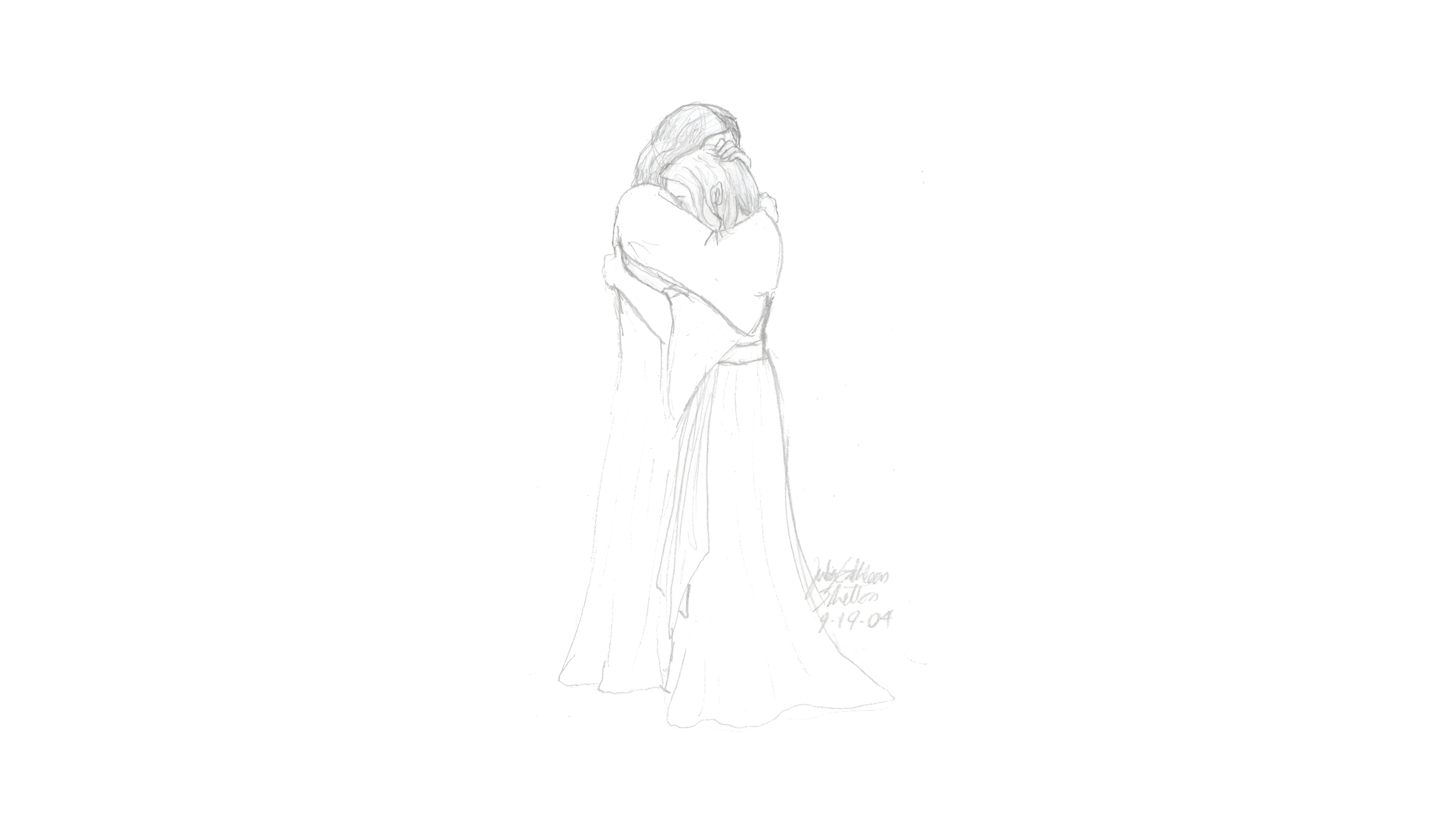
Three Reunions and a Failure: How Biblical Heroes Make Up or Give Up (Reunion Hermeneutic Series)
The family reunion lens is a hermeneutic tool — a theme you bring to a text and let interact with your reading in both directions. The first article introduced the tool. The second situated it in the long tradition of biblical assembly and interpretation.
This article puts the tool to work on three texts from the Hebrew Bible. They come from different centuries, different genres, different source traditions. The Jacob/Esau material is patriarchal narrative from multiple strands. The Joseph cycle is a novella. The Exodus is national origin story. They are not a coordinated collection. The lens meets each one separately.
Three encounters. Three very different family situations. In each case, we ask: what does this text show us about reunion when we read it through this lens? And what does our own experience of family reunion make visible in this text that we might not have seen before?
The argument is not that these three texts share a message. They don't. They come from different communities across centuries. The argument is that the lens is productive in each — it reveals something that other lenses leave in the dark.
Jacob and Esau (Genesis 25-33)

Noah’s Ark, the Rainbow, and God’s Promise
Let’s talk about Noah’s Ark.
It’s one we all know.
But, have you looked at it? It’s weird!
Noah takes two of each animal, and then makes a burnt sacrifice when he lands. How?! What was sacrificed?!
But more importantly, what does the story actually have to say about God and the Christian community?

The Only Bible Verse About Pregnancy Loss Assigns a Fine. Here's Why That Matters.
Exodus 21:22-25 prescribes a fine if fighting men cause a woman to miscarry, but "life for life" if the woman herself dies — a legal distinction that shows the fetus did not have the same status as a born person under the very law code most often cited as biblical authority.
Trans Identity, and What the Bible Actually Says. Here's Why It Matters
The only verse in the Bible that mentions clothing and gender is a law about disguise. Not identity. Disguise.
It sits inside a purity code that also prohibits mixed fabrics, that Christians do not follow, and that addresses a world in which "trans" as a concept did not exist. A trans woman wearing women's clothes is not disguising herself. She is dressing as herself. The framework of the prohibition does not apply to someone living authentically. It applies to the opposite.
But the deeper problem with using this verse against trans people is not the misapplication. It is the pattern. Take a text from one context, strip its meaning, claim divine authority, and use it to harm people the text was never about.

Black Skin Is Not a Biblical Curse. The "Curse of Ham" Was Fabricated to Justify Slavery. Here's the Evidence
Christian theologians put a lot of work into persuading themselves that Black skin is a punishment from God.
And now we have a lot of work to do in healing our communities from this…. rhetoric.
First.
No verse in the Bible connects skin color to divine punishment. The passage cited for the "Curse of Ham" — Genesis 9:20–27 — curses Canaan, not Ham, says nothing about skin color, says nothing about Africa, and says nothing about any racial group. The connection between Ham, Africa, and dark skin was manufactured by European slave traders and slaveholding theologians who needed divine authorization for an economic system built on kidnapping and forced labor. This was not interpretation. It was fabrication for profit. And while the lie has been formally rescinded by some institutions, it has not been abandoned with anything close to the rigor with which it was constructed. Two hundred years of systematic, institutionally funded, seminary-taught racial theology cannot be corrected by a denominational press release. It requires the same verse-by-verse, claim-by-claim dismantling that built it in the first place.

Leviticus Was Written by Priests. Was It Written for Priests? The Answer Is Weirder Than You'd Think.
I’ve sometimes wondered, “is it true that Leviticus is only meant for Priests?
Or is it also meant for the rest of Ancient Israel?
So I decided to look into it. Not with an agenda. Not with a matter to debunk.
Just, Biblical curiosity.
Let’s do this:
Genesis and the Big Bang Completely Agree. Here’s how.
As ministers, we all have those questions that catch us off guard, and for some of us, it’s “The Big Bang.” If you grew up being told that the Bible is the word of God — and it is — and then someone tells you that the universe is 13.8 billion years old and started with a singularity instead of a speaking voice, it can feel like you have to choose. Bible or science. Faith or evidence. God or physics.
You don't have to choose between reason and faith.
Let’s look closer…