
Article categories:
- BibleReference
- BibleStudy
- Torah
- Gospels
- Confirmation
- Supersessionism
- Methodism
- DoNoHarm
- PublicTheology
- ClinicalEthics
- Translations
- LiturgicalArt
- ChristianTheology
- ReunionHermeneutic
- Gender
- TheProphets
- Sexuality
- Epistles
- ChildAbuse
- Grace
- State
- Repentance
- ChristianHistory
- DomesticViolence
- Sermons
- MentalHealth
- TheWritings
- Pregnancy
- Preaching
- Disability
- Race

The Holy Spirit's Pronouns Change. That Tells Us More Than You'd Think.
The Hebrew word for "Spirit" — ruach — is feminine.
The Greek word — pneuma — is neuter.
The Latin word — spiritus — is masculine.
The English word — "Spirit" — has no grammatical gender at all.
The third person of the Trinity has had, across the history of translation, every possible set of pronouns. And nobody seems to want to talk about it.
Let's start at the beginning. Literally.
Genesis 1:1–2
"In the beginning God created the heavens and the earth. The earth was formless and void, and darkness was over the face of the deep, and the Spirit of God was hovering over the face of the waters."
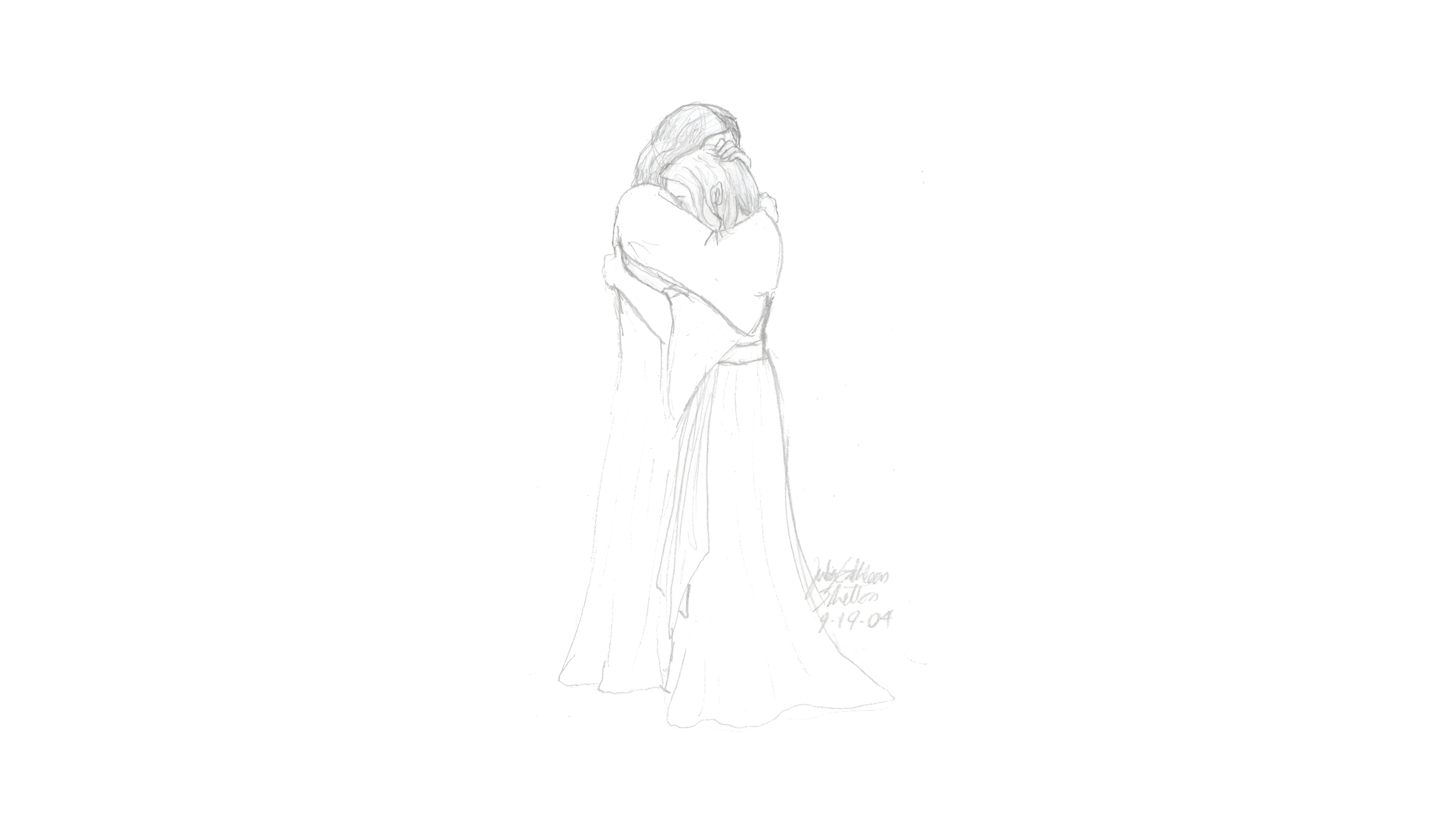
The Miracle of the Prodigal Son Isn't What You Think It Is. (Reunion Hermeneutic Series)
This is the fifth of a five-part series on Biblical Family Reunions:
The Bible Is One Long Family Meeting: The Family Reunion Lens in Ministry
Three Reunions and a Failure: How Biblical Heroes Make Up or Give Up
"I Am a Withered Tree." How Isaiah 56 Revises the Family's Rules from the Inside
You know this story? Maybe you’ve heard a hundred sermons on it. The younger son leaves, wastes his inheritance, comes home, and the father welcomes him with open arms. Grace. Forgiveness. The love of God.
That's a fine reading. But I want to show you something in this text that I think most of us have walked right past.
Let's read it again. Slowly. And instead of watching the younger son, watch the family.

What Does the Bible Really Say About Gay People?
Let me tell you a little story.
One day, I saw a man with a megaphone, chasing children around in my neighborhood, condemning the children to hell, because the man thought they were dressed a little weird.
From his megaphone he yelled, “you’re going to hell!” To children. For dressing different.
A few feet away, somebody with a “God Hates Gays” sign was livestreaming the harrasment,
and the police observed.
So I stood in between the man and the kids. I’m tall, I’m used to bullies, better me than them.
And I blasted “A Whole New World” to contain the situation (and demonetize the man’s footage).
Then, the man, no longer able to attack the children, looked at me and said,
“They are full of envy, murder, strife, deceit and malice. They are gossips, slanderers, God-haters, insolent, arrogant and boastful; they invent ways of doing evil; they disobey their parents; they have no understanding, no fidelity, no love, no mercy. Although they know God’s righteous decree that those who do such things deserve death, they not only continue to do these very things but also approve of those who practice them.”
A perfectly accurate recitation of Romans 1, except that he completely inverted the meaning of the passage by cutting it short.
So I said to the man, “Finish the sentence. If you quote Romans 1, you need to quote Romans 2 to finish the sentence. Therefore you have no excuse when you condemn others, for in doing so, you condemn yourself.

How Pageants Can Teach Compassion
Pageants can be such a rich opportunity to share in our most precious stories. But ever notice how they can be so… boring?
But believe me, the story isn’t boring, it’s just when the script becomes too familiar.
So what’s the solution?
Change the script?
Yes.
Change the script.
By in my opinion, if you must change Christian tradition, always start from Scripture and always lead with doing no harm.
Let’s look closer…

The Bible Tells the Same Stories More Than Once. On Purpose. And It's Weirder Than You Think.
Growing up on the Bible, I never really noticed a lot of these little moments where a similar story is told twice. I just assumed that I got a little confused along the way, or maybe it was like how Deuteronomy seems to echo a lot of Leviticus.
However, now that I’m a little bit older, and able to notice those little moments more clearly,
there’s like, a whole second Bible there, just waiting to be discovered!
Ok, let’s look at it:
If you read the Bible carefully — not devotionally, not defensively, just carefully — you will notice something strange. The same stories appear more than once. Sometimes they are placed side by side. Sometimes they are woven together into a single narrative. Sometimes they are printed in separate books entirely. The differences between the versions are not mistakes. They are not evidence that the Bible is broken. They are evidence that the Bible is doing something far more interesting than most people have been taught. And once you see the pattern, you cannot unsee it.

Jesus Called the King a Fox, Then Described God as a Mother Hen. Here's Why Both Matter.
Every few years, lectionary preachers end up on this curious little passage, where Jesus calls Herod a “fox” and then calls God a “Mother Hen.” Isn’t that neat? Let’s look closer…
When Pharisees warn Jesus that Herod wants to kill him (Luke 13:31-35), Jesus responds with three moves: he declares his mission of healing, he denounces the pattern of political violence that kills prophets, and he envisions God's desire to gather her children together under her wings. This three-part response — declare, denounce, envision — is a model for how the church responds to empire in every generation. Including ours. Including now.

The Magi Didn't Just Take a Detour. They Chose a Different Way Home. Here's Why That Matters.
The Magi Didn't Just Take a Detour. They Chose a Different Way Home. Here's Why That Matters.
When the Magi are warned in a dream not to return to Herod, they go home by another route (Matthew 2:12). This is usually treated as a plot detail — the wise men dodge the villain and the story moves on. But the choice to go home by another way is doing theological work. The comfortable, efficient route would have served the empire. The Magi set it aside and chose a longer, harder path — because they realized that the way they were going would benefit the powers that wanted to harm the ones they cared about.
The Magi were not helpless travelers. Let's be clear about that. They had resources — education, wealth, the capacity to chart a fast, comfortable trail home. They had every reason to take the efficient route.
But they realized that the way they were going would carry information back to a king who intended to use it for violence. So they set aside the familiar trail and found a new way.

Jesus Said "Don't Look Back." He Didn't Say "Don't Think." Here's What the Plow Actually Means.
When Jesus says that anyone who puts a hand on the plow and looks back is not fit for the kingdom of God (Luke 9:62), it sounds harsh. Maybe it is. But the plow metaphor is doing something specific — and it's not telling you to abandon your family without warning or surrender your brain at the door. A plow requires sustained attention, active decision-making, and constant correction. Discipleship, it turns out, is not passive. It is one of the most demanding forms of agency there is.
Before we get to the plow, we need to know where we are. Because Luke cares about where we are.
Luke's Gospel, combined with Acts, tells the story of God's mission expanding in concentric circles — Jesus, then family, then the temple in Nazareth, then Galilee, then Samaria, then Jerusalem, then Corinth, Philippi, Ephesus, Greece, and finally Rome. And now across the planet. Luke-Acts is the story of a movement that began in a very particular place and expanded beyond every tribal and national boundary.
In this passage, we're in Samaria. That matters.

John's Gospel Is a Coming-Out. Here's Why That Matters for the Church Right Now.
The four Gospels are not four copies of the same story. Matthew, Mark, and Luke were written for a season of caution — cryptic parables, coded language, a Messiah whose identity is a secret the reader has to figure out. John was written for a season of declaration — direct statements, bold claims, no parables, no mystery. "God so loved the world." "I am the way." "Love one another." The shift from the Synoptics to John maps onto an experience that some of us know personally: the shift from caution to clarity. From protecting a secret to declaring the truth. From letting people fill in the blanks to saying it out loud. John's Gospel is a coming-out. And the church in 2026 is in a season that needs exactly what John was written for.

Rome Killed Jesus. God Did Not Require It. Here's Why
Jesus was executed by the Roman Empire on political charges, by Roman soldiers, using a method reserved for slaves and rebels — and he asked God to stop it. If God required the death, that prayer makes no sense. If Rome did it, the prayer makes complete sense. This changes everything about what the cross means — and what it means for your suffering.

We Sing Christmas Carols for a Month, and Wonder Why Advent Feels Hollow. Here's a Different Way.
I’m putting on my Music Director hat for this one.
One big problem with Christmas music,
is that we sing it all throughout Advent (the weeks leading up to Christmas), so by the time Christmas actually comes around, we’re all kinda tired of it.
Go ahead! Name an Advent hymn other than “The Advent Hymn” and “Lo How A Rose.”
If you named anything at all, please contact me so I can learn from you.
Anyways,
Problem: Christmas feels boring
Solution: five new Advent Hymns
Outcome: Christmas Eve Worship feels better.
So here are the hymns, but let’s start from the beginning