
Article categories:
- BibleReference
- BibleStudy
- Torah
- Gospels
- Confirmation
- Supersessionism
- Methodism
- DoNoHarm
- PublicTheology
- ClinicalEthics
- Translations
- LiturgicalArt
- ChristianTheology
- ReunionHermeneutic
- Gender
- TheProphets
- Sexuality
- Epistles
- ChildAbuse
- Grace
- State
- Repentance
- ChristianHistory
- DomesticViolence
- Sermons
- MentalHealth
- TheWritings
- Pregnancy
- Preaching
- Disability
- Race
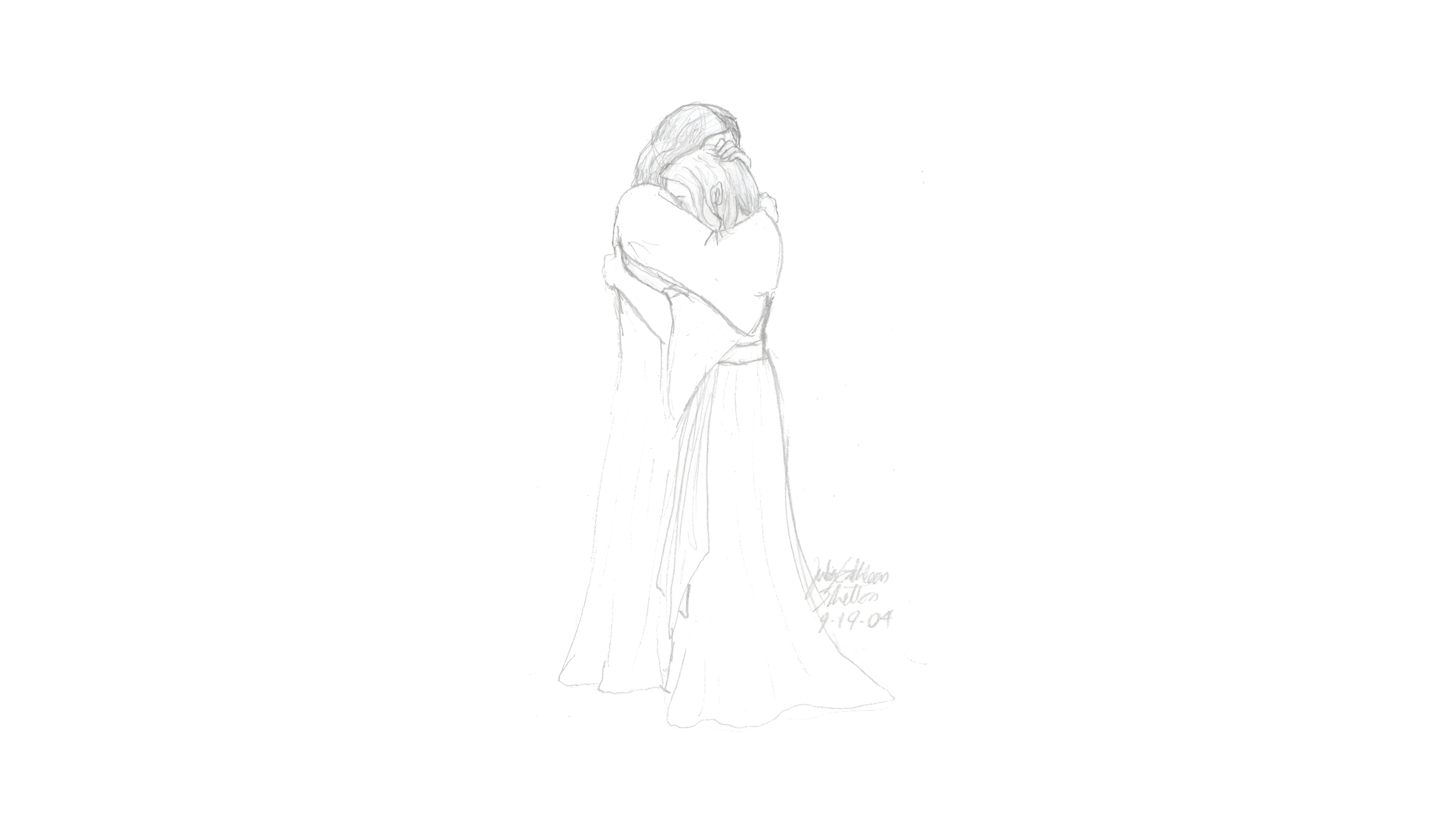
The Miracle of the Prodigal Son Isn't What You Think It Is. (Reunion Hermeneutic Series)
This is the fifth of a five-part series on Biblical Family Reunions:
The Bible Is One Long Family Meeting: The Family Reunion Lens in Ministry
Three Reunions and a Failure: How Biblical Heroes Make Up or Give Up
"I Am a Withered Tree." How Isaiah 56 Revises the Family's Rules from the Inside
You know this story? Maybe you’ve heard a hundred sermons on it. The younger son leaves, wastes his inheritance, comes home, and the father welcomes him with open arms. Grace. Forgiveness. The love of God.
That's a fine reading. But I want to show you something in this text that I think most of us have walked right past.
Let's read it again. Slowly. And instead of watching the younger son, watch the family.

The Bible Tells the Same Stories More Than Once. On Purpose. And It's Weirder Than You Think.
Growing up on the Bible, I never really noticed a lot of these little moments where a similar story is told twice. I just assumed that I got a little confused along the way, or maybe it was like how Deuteronomy seems to echo a lot of Leviticus.
However, now that I’m a little bit older, and able to notice those little moments more clearly,
there’s like, a whole second Bible there, just waiting to be discovered!
Ok, let’s look at it:
If you read the Bible carefully — not devotionally, not defensively, just carefully — you will notice something strange. The same stories appear more than once. Sometimes they are placed side by side. Sometimes they are woven together into a single narrative. Sometimes they are printed in separate books entirely. The differences between the versions are not mistakes. They are not evidence that the Bible is broken. They are evidence that the Bible is doing something far more interesting than most people have been taught. And once you see the pattern, you cannot unsee it.

Jesus Called the King a Fox, Then Described God as a Mother Hen. Here's Why Both Matter.
Every few years, lectionary preachers end up on this curious little passage, where Jesus calls Herod a “fox” and then calls God a “Mother Hen.” Isn’t that neat? Let’s look closer…
When Pharisees warn Jesus that Herod wants to kill him (Luke 13:31-35), Jesus responds with three moves: he declares his mission of healing, he denounces the pattern of political violence that kills prophets, and he envisions God's desire to gather her children together under her wings. This three-part response — declare, denounce, envision — is a model for how the church responds to empire in every generation. Including ours. Including now.

Jeremiah Was Not One Thing. Neither Are You. Here's What Iridescence Teaches Us About Calling.
Jeremiah Was Not One Thing. Neither Are You. Here's What Iridescence Teaches Us About Calling.
Before he become Canonized as the author of the Prophetic Book of Jeremiah, he was just… a person, with a life, and parts of a community. Just like you.
There's a set of mosaic panels at Lake Merritt United Methodist Church in Oakland that do something strange. They're made from Favrile glass — an iridescent art glass that Louis Comfort Tiffany developed in the late 1800s — and the thing about them is that they never look the same twice. The colors shift depending on where you're standing and what time of day it is. Morning light, afternoon light, cloudy day, bright day — different image every time.
A photograph captures one moment. And one moment is not enough.
The panels are called Te Deum Laudamus — "We Praise You, God." Christ in gold, radiating from a throne. Angels with crowns and scriptures and lilies. Moses and Paul kneeling. Worshipers carrying lamps and incense out of the tent tabernacle — the dwelling place of God during the legendary journey out of Egypt.
And the whole thing is shifting. Always. Because that's what iridescence does.

The Magi Didn't Just Take a Detour. They Chose a Different Way Home. Here's Why That Matters.
The Magi Didn't Just Take a Detour. They Chose a Different Way Home. Here's Why That Matters.
When the Magi are warned in a dream not to return to Herod, they go home by another route (Matthew 2:12). This is usually treated as a plot detail — the wise men dodge the villain and the story moves on. But the choice to go home by another way is doing theological work. The comfortable, efficient route would have served the empire. The Magi set it aside and chose a longer, harder path — because they realized that the way they were going would benefit the powers that wanted to harm the ones they cared about.
The Magi were not helpless travelers. Let's be clear about that. They had resources — education, wealth, the capacity to chart a fast, comfortable trail home. They had every reason to take the efficient route.
But they realized that the way they were going would carry information back to a king who intended to use it for violence. So they set aside the familiar trail and found a new way.

Jesus Said "Don't Look Back." He Didn't Say "Don't Think." Here's What the Plow Actually Means.
When Jesus says that anyone who puts a hand on the plow and looks back is not fit for the kingdom of God (Luke 9:62), it sounds harsh. Maybe it is. But the plow metaphor is doing something specific — and it's not telling you to abandon your family without warning or surrender your brain at the door. A plow requires sustained attention, active decision-making, and constant correction. Discipleship, it turns out, is not passive. It is one of the most demanding forms of agency there is.
Before we get to the plow, we need to know where we are. Because Luke cares about where we are.
Luke's Gospel, combined with Acts, tells the story of God's mission expanding in concentric circles — Jesus, then family, then the temple in Nazareth, then Galilee, then Samaria, then Jerusalem, then Corinth, Philippi, Ephesus, Greece, and finally Rome. And now across the planet. Luke-Acts is the story of a movement that began in a very particular place and expanded beyond every tribal and national boundary.
In this passage, we're in Samaria. That matters.

John's Gospel Is a Coming-Out. Here's Why That Matters for the Church Right Now.
The four Gospels are not four copies of the same story. Matthew, Mark, and Luke were written for a season of caution — cryptic parables, coded language, a Messiah whose identity is a secret the reader has to figure out. John was written for a season of declaration — direct statements, bold claims, no parables, no mystery. "God so loved the world." "I am the way." "Love one another." The shift from the Synoptics to John maps onto an experience that some of us know personally: the shift from caution to clarity. From protecting a secret to declaring the truth. From letting people fill in the blanks to saying it out loud. John's Gospel is a coming-out. And the church in 2026 is in a season that needs exactly what John was written for.

Jonathan Stayed with His Abusive Father. The Bible Doesn't Call That a Mistake. Here's What It Calls It.
Jonathan — prince of Israel, military hero, covenant partner of David — spent his adult life inside a family system that was falling apart. His father Saul was violent, unstable, and increasingly dangerous. Saul tried to kill David, threw a spear at Jonathan, and publicly humiliated him. Jonathan could see what was happening. He was not naive. He was not trapped. He had a way out — David, the future king, his closest person in the world, wanted him. But Jonathan stayed with his father. He stayed with his brothers. He died with them at Gilboa. Interpreters have called this piety, or tragedy, or wasted loyalty. But there is another way to read it: Jonathan stayed because he was grounded. His covenant with David didn't pull him away from his family — it gave him the strength to remain present to them without being destroyed. This is not a story about martyrdom. It is a story about what it looks like to stay in a hard place when you have someone who holds you steady.
"I Am a Withered Tree." How Isaiah 56 Revises the Family's Rules from the Inside (Reunion Hermeneutic Series)
By now you have the tool. You've seen how it works on three different texts from the Hebrew Bible. This article is different. We're not demonstrating the lens anymore. We're using it.
Isaiah 56. Eight verses. One of the shorter prophetic oracles. It sits in what scholars call Third Isaiah (chapters 56-66), composed during or after the return from exile — a community rebuilding, redefining itself, arguing about who belongs.
Let's read it.
The Text

What is a Wesleyan Bible Study
A Wesleyan Bible study is a style — not a denomination, not a politics, not a club — but a style of rigorously faithful reading of scripture, built on John Wesley’s instructions: show up, do no harm first, read Scripture through four lenses, keep the table open, and trust that grace was already moving before you arrived.

Noah’s Ark, the Rainbow, and God’s Promise
Let’s talk about Noah’s Ark.
It’s one we all know.
But, have you looked at it? It’s weird!
Noah takes two of each animal, and then makes a burnt sacrifice when he lands. How?! What was sacrificed?!
But more importantly, what does the story actually have to say about God and the Christian community?
Rome Killed Jesus. God Did Not Require It. Here's Why
Jesus was executed by the Roman Empire on political charges, by Roman soldiers, using a method reserved for slaves and rebels — and he asked God to stop it. If God required the death, that prayer makes no sense. If Rome did it, the prayer makes complete sense. This changes everything about what the cross means — and what it means for your suffering.

Leviticus Was Written by Priests. Was It Written for Priests? The Answer Is Weirder Than You'd Think.
I’ve sometimes wondered, “is it true that Leviticus is only meant for Priests?
Or is it also meant for the rest of Ancient Israel?
So I decided to look into it. Not with an agenda. Not with a matter to debunk.
Just, Biblical curiosity.
Let’s do this:

Genesis and the Big Bang Completely Agree. Here’s how.
As ministers, we all have those questions that catch us off guard, and for some of us, it’s “The Big Bang.” If you grew up being told that the Bible is the word of God — and it is — and then someone tells you that the universe is 13.8 billion years old and started with a singularity instead of a speaking voice, it can feel like you have to choose. Bible or science. Faith or evidence. God or physics.
You don't have to choose between reason and faith.
Let’s look closer…