
Article categories:
- BibleReference
- BibleStudy
- Torah
- Gospels
- Confirmation
- Supersessionism
- Methodism
- DoNoHarm
- PublicTheology
- ClinicalEthics
- Translations
- LiturgicalArt
- ChristianTheology
- ReunionHermeneutic
- Gender
- TheProphets
- Sexuality
- Epistles
- ChildAbuse
- Grace
- State
- Repentance
- ChristianHistory
- DomesticViolence
- Sermons
- MentalHealth
- TheWritings
- Pregnancy
- Preaching
- Disability
- Race

Sermon: The Bible and World Peace (UU)
This is the recording, transcript, and manuscript from a sermon I recently offered at Starr King Unitarian Universalist Church in Hayward, California.
Given that I approached the setting as something of an outsider with a particular affection for the Bible, I preached with the question,
“what, if anything, does the Bible have to offer, on the journey toward world peace?”
and considered that question through Durkheim and Foucault (and in an earlier draft, Michael Cavanaugh’s Migrations of the Holy), landing on an argument that the Christian Scripture’s polycultural nature is part of its gift to humanity.
Sermon: Justice and the Kingdom of God (UMC)
I recently had the opportunity to preach on the topic of Jesus’s teachings at Buena Vista United Methodist Church in Alameda.
Drawing from the last Bishop Mortimer Arias, the sermon focused on the question of what Jesus taught about, and the congregation’s distinctively faithful “Buena Vista way”.
This sermon considers the question, “what does justice work have to do with following Jesus?”
Six excerpts from the Christ Comic Hero Bible
It occurred to me recently: it’s possible to put out an entire Children’s Bible, paraphrased and illustrated by AI.
This isn’t necessarily bad… I think. I’ve always written with some kind of autocorrect to keep me legible and efficient.
But, I wanted to share some excerpts from the sample images of the Christ Comic Hero Bible, since it’s marketed as “true to scripture.”
Disability Theology: What I’m Learning
A Field We Always Needed.
Disability theology is an established field of academic theology. It has major scholars, landmark texts, and a growing body of work that intersects with liberation theology, pastoral care, bioethics, and biblical studies. It has been active for over thirty years.
The field has a central commitment that distinguishes it from most theology written about disability: it speaks from within disabled experience, not about it from the outside. That distinction matters. These are not able-bodied theologians speculating about what disabled people need. These are disabled scholars and their close collaborators doing theology from the ground up.
Let me introduce you to some of them.
Science vs. Religion: On Debate and Genesis
If you grew up like me, knowing that the Bible is the word of God, and then someone tells you that the universe is 13.8 billion years old, it can feel like you have to choose.
You don't have to choose between reason and faith.
I’m not saying that you shouldn’t debate between religion and faith.
I’m saying that at the end of the day,
you don’t have to choose a winner and a loser.
There’s a Season for Debate
Debate is one of the only spaces where different perspectives are allowed to exist out loud without requiring resolution.
That's rare. That's valuable.
When religious communities critique science education, they can push scientists and educators to develop clearer, more effective language about what they're actually claiming and what they're not.
And when scientific critique pushes back on religious institutions, it can be the pressure that turns a community from causing harm toward supporting healing.
Why I use Six Translations
This Is Why I
-Preach from the NRSV,
-Study from the Tanakh,
-Reference the ESV,
-Give Out the CEB,
-Compose from The Message,
and Still Follow King James
There's a silly church camp song that goes, "Mr. Postman, bring to me, a copy of the NIV — can't stand to wait any longer, I need the Bible to grow stronger."
That's about as much translation education as most of us got.
No complaints from me though.
Here's the New International Version (NIV) ’s rendering of Romans 8:28:

John Wesley’s Three Rules Quoted
As it turns out, before Wesley settled on “Do no harm, do good, attend to the ordinances of God,”
the three rules were:
Show up every week
Arrive on time
Start on time
Wait a Minute. Bad Bunny Is Doing Ancient Prophet Stuff.
This past Sunday,
A former altar boy and church choir kid from Vega Baja, Puerto Rico
walked onto the biggest stage in American entertainment
and turned it into a sugar cane field.
Then he walked through that field past old men playing dominoes,
past a piragua cart with flags from across the Americas on every syrup bottle,
past kids sleeping on chairs at a party
because that's what kids do at Caribbean gatherings when the adults won't stop dancing.
He wore a jersey with OCASIO on the back and the number 64.
His mother's birth year and her family name.
He performed entirely in Spanish.

Wesley Never Said 'Do All the Good You Can.' And It Matters That We Keep Saying He Did.
“Do all the good you can, by all the means you can…" is not a Wesley quote — it appears nowhere in his sermons, journals, or letters — and its popularity is not harmless, because it replaces Wesley's actual first rule, "do no harm," with unconstrainted interventionism, and that reversal has theological consequences.
Confirmation Part 1/10: The Bible
This is part of a ten-part series of mix-and-match curriculum resource for UMC Confirmation Classes and Teachers
Also available in paperback and ebook
The Bible is one of the most influential collections of writing in human history. The wordBible comes from the Greek biblia, meaning "books." It's not a single book written by a single author. It's a library of sacred writings concerning God's dealings with humankind and the revelations of God's will, assembled across centuries and continents.
Why does that matter? Because the Bible has shaped the course of civilizations, political development, literature, art, and ideas about truth, justice, and purpose. It continues to influence the world today — at its best, helping humanity to be more humane. For Christians and Jews, the Bible is their Holy Book: a source of religious belief, truth revealed by God, laws for living according to God's plan, guidelines for worship, and historical documents. And for anyone willing to open it, the Bible can be a source of inspiration and insight, a guide for living a just and loving life, and a place to bring the big questions.

"Do No Harm”: How it became Wesley's Prime Directive, and then Standard Medical Practice
If you grew up Methodist — or anywhere near Methodist — you've heard the three General Rules.
Do no harm. Do good. Stay in love with God.
They sound like a bumper sticker. They're not. They're a protocol. And the ordering matters more than almost anyone realizes.
I used to think "do no harm" was just a nice way to start a list. Like stretching before a run. Important, sure, but the real work was in the next two — do good, stay in love with God. The action stuff. The exciting stuff.
Then I became a hospital chaplain.

Don't Stop Believin': How Jonathan Cain Became Public Theologian Number One (Journey Series)
This is the first of a four-part Public Theology series, concluding in
“Jonathan Cain, America's Great Theologian. The Journey to the White House”
There's a lawn at the Gorge Amphitheatre in Washington where I first learned prayer.
I was about eight. Journey with Foreigner. Steve Augeri was singing, Jonathan Cain was on keys, Neal Schon was doing what Neal Schon always does. The adults said we were in the nosebleeds, but we were on the lawn, which was better. The lawn is big and fun. You can move. You can breathe. Nobody's blocking your view of the sky.
Repent, and Sin (Alone) No More.
Here’s a weird one. I have a confession.
I love preaching repentance.
But, hear me out, because we might be thinking of two separate things.
In my Wesleyan tradition, Grace is already there. We’re already forgiven for everything we can possibly do.
But I’ve noticed that sometimes, that there are these moments, when you truly actually FEEL Grace. When you EXPERIENCE absolute forgiveness, and you can finally let your guard down.
But the tricky thing is,
we don’t get to EXPERIENCE grace
until we’ve experienced a little bit of repenting, or owning up,
for our mistakes.
Let’s break this all down though…

The Holy Spirit's Pronouns Change. That Tells Us More Than You'd Think.
The Hebrew word for "Spirit" — ruach — is feminine.
The Greek word — pneuma — is neuter.
The Latin word — spiritus — is masculine.
The English word — "Spirit" — has no grammatical gender at all.
The third person of the Trinity has had, across the history of translation, every possible set of pronouns. And nobody seems to want to talk about it.
Let's start at the beginning. Literally.
Genesis 1:1–2
"In the beginning God created the heavens and the earth. The earth was formless and void, and darkness was over the face of the deep, and the Spirit of God was hovering over the face of the waters."
The Miracle of the Prodigal Son Isn't What You Think It Is. (Reunion Hermeneutic Series)
This is the fifth of a five-part series on Biblical Family Reunions:
The Bible Is One Long Family Meeting: The Family Reunion Lens in Ministry
Three Reunions and a Failure: How Biblical Heroes Make Up or Give Up
"I Am a Withered Tree." How Isaiah 56 Revises the Family's Rules from the Inside
You know this story? Maybe you’ve heard a hundred sermons on it. The younger son leaves, wastes his inheritance, comes home, and the father welcomes him with open arms. Grace. Forgiveness. The love of God.
That's a fine reading. But I want to show you something in this text that I think most of us have walked right past.
Let's read it again. Slowly. And instead of watching the younger son, watch the family.

What Does the Bible Really Say About Gay People?
Let me tell you a little story.
One day, I saw a man with a megaphone, chasing children around in my neighborhood, condemning the children to hell, because the man thought they were dressed a little weird.
From his megaphone he yelled, “you’re going to hell!” To children. For dressing different.
A few feet away, somebody with a “God Hates Gays” sign was livestreaming the harrasment,
and the police observed.
So I stood in between the man and the kids. I’m tall, I’m used to bullies, better me than them.
And I blasted “A Whole New World” to contain the situation (and demonetize the man’s footage).
Then, the man, no longer able to attack the children, looked at me and said,
“They are full of envy, murder, strife, deceit and malice. They are gossips, slanderers, God-haters, insolent, arrogant and boastful; they invent ways of doing evil; they disobey their parents; they have no understanding, no fidelity, no love, no mercy. Although they know God’s righteous decree that those who do such things deserve death, they not only continue to do these very things but also approve of those who practice them.”
A perfectly accurate recitation of Romans 1, except that he completely inverted the meaning of the passage by cutting it short.
So I said to the man, “Finish the sentence. If you quote Romans 1, you need to quote Romans 2 to finish the sentence. Therefore you have no excuse when you condemn others, for in doing so, you condemn yourself.

How Pageants Can Teach Compassion
Pageants can be such a rich opportunity to share in our most precious stories. But ever notice how they can be so… boring?
But believe me, the story isn’t boring, it’s just when the script becomes too familiar.
So what’s the solution?
Change the script?
Yes.
Change the script.
By in my opinion, if you must change Christian tradition, always start from Scripture and always lead with doing no harm.
Let’s look closer…
The Bible Tells the Same Stories More Than Once. On Purpose. And It's Weirder Than You Think.
Growing up on the Bible, I never really noticed a lot of these little moments where a similar story is told twice. I just assumed that I got a little confused along the way, or maybe it was like how Deuteronomy seems to echo a lot of Leviticus.
However, now that I’m a little bit older, and able to notice those little moments more clearly,
there’s like, a whole second Bible there, just waiting to be discovered!
Ok, let’s look at it:
If you read the Bible carefully — not devotionally, not defensively, just carefully — you will notice something strange. The same stories appear more than once. Sometimes they are placed side by side. Sometimes they are woven together into a single narrative. Sometimes they are printed in separate books entirely. The differences between the versions are not mistakes. They are not evidence that the Bible is broken. They are evidence that the Bible is doing something far more interesting than most people have been taught. And once you see the pattern, you cannot unsee it.
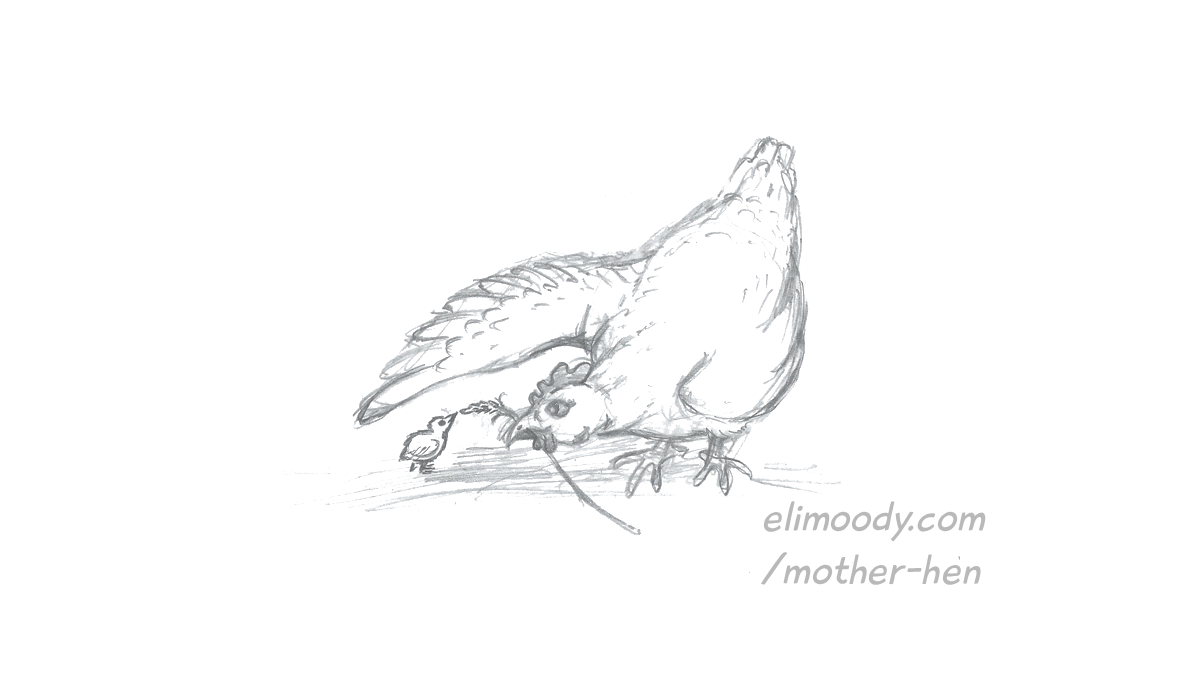
Jesus Called the King a Fox, Then Described God as a Mother Hen. Here's Why Both Matter.
Every few years, lectionary preachers end up on this curious little passage, where Jesus calls Herod a “fox” and then calls God a “Mother Hen.” Isn’t that neat? Let’s look closer…
When Pharisees warn Jesus that Herod wants to kill him (Luke 13:31-35), Jesus responds with three moves: he declares his mission of healing, he denounces the pattern of political violence that kills prophets, and he envisions God's desire to gather her children together under her wings. This three-part response — declare, denounce, envision — is a model for how the church responds to empire in every generation. Including ours. Including now.
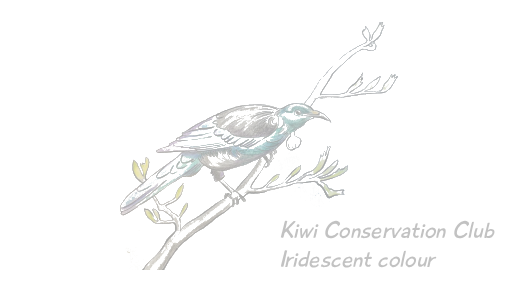
Jeremiah Was Not One Thing. Neither Are You. Here's What Iridescence Teaches Us About Calling.
Jeremiah Was Not One Thing. Neither Are You. Here's What Iridescence Teaches Us About Calling.
Before he become Canonized as the author of the Prophetic Book of Jeremiah, he was just… a person, with a life, and parts of a community. Just like you.
There's a set of mosaic panels at Lake Merritt United Methodist Church in Oakland that do something strange. They're made from Favrile glass — an iridescent art glass that Louis Comfort Tiffany developed in the late 1800s — and the thing about them is that they never look the same twice. The colors shift depending on where you're standing and what time of day it is. Morning light, afternoon light, cloudy day, bright day — different image every time.
A photograph captures one moment. And one moment is not enough.
The panels are called Te Deum Laudamus — "We Praise You, God." Christ in gold, radiating from a throne. Angels with crowns and scriptures and lilies. Moses and Paul kneeling. Worshipers carrying lamps and incense out of the tent tabernacle — the dwelling place of God during the legendary journey out of Egypt.
And the whole thing is shifting. Always. Because that's what iridescence does.